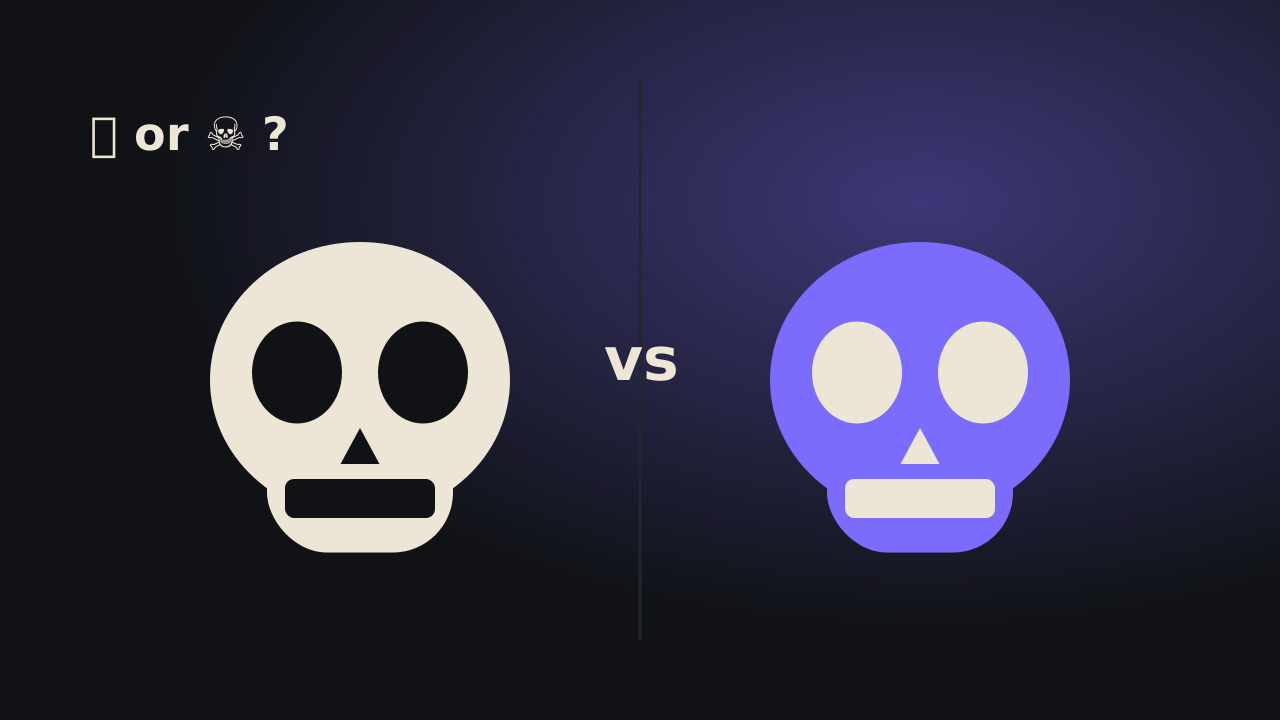
They look like cousins, and technically they are — but 💀 and ☠️ send very different signals. Choosing the wrong one can flip your tone completely.
The plain skull 💀
This is the playful one. Its dominant modern meaning is laughter — “I'm dead.” It's casual, it's everywhere, and among friends it almost never reads as threatening. It also covers exhaustion, embarrassment and light spooky-season vibes.
The skull and crossbones ☠️
Add crossed bones and the tone hardens. ☠️ carries real weight: poison, hazards, pirate themes. It's the symbol you'd expect on a warning label, not under a funny video. Used casually, it can feel oddly intense.
Which should you send?
If you mean “that's hilarious” or “I'm so tired,” reach for 💀. If you mean “this is genuinely dangerous” or you're going for a darker, edgier aesthetic, ☠️ fits better. In short: 💀 is a laugh, ☠️ is a warning.
A quick tone test
Read your message out loud. If it's light and funny, the plain skull matches. If it's serious or cautionary, the crossbones version won't undercut it. When in doubt, 💀 is the safer, friendlier default.
See how both compare with 👻 and 😂 in the comparison table.